
Views: 0 Author: Site Editor Publish Time: 2026-04-16 Origin: Site
In the world of B2B manufacturing, choosing the right material is the difference between a high-profit order and a costly mistake. Mouse pad factories, often operating as OEMs/ODMs, are predominantly concentrated in China and Taiwan, with niche premium manufacturing also found in Japan and Germany. For printing factories, the fabric surface of a mouse pad is not just “cloth”—it is a technical substrate that determines the final print quality.
At www.fdmat.com, we specialize in providing industrial-grade blanks that meet the rigorous standards of international buyers. We supply custom mouse pads for businesses, corporate gifts, and promotional events, and can produce with no minimum order quantities for maximum flexibility. The standard size is 7.75" x 9.25", with a thickness of about 0.2 inches (1/16" natural rubber base), ensuring the pad stays in place and is suitable for everyday use and branding. Full bleed artwork is used to cover the entire surface, enhancing visual appeal. Our collection of custom mouse pads is available in various sizes and quantities to suit different business needs. When selecting materials, the natural rubber base provides excellent grip and stability, especially important for gaming and high-precision tasks. This guide helps you select the correct fabric to ensure stable production and vibrant colors.
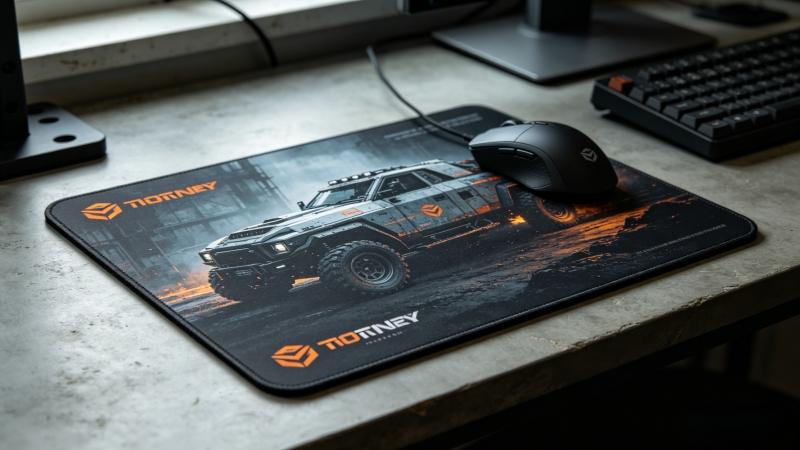
In the B2B market, selecting a fabric depends on the end-user’s technical requirements. Mouse pad factories produce surfaces that balance friction, speed, and comfort, primarily utilizing natural rubber or synthetic foam for the base and fabrics like polyester for the top. Mouse pads are commonly made from materials such as polyester fabric, rubber, and synthetic paper, each offering unique benefits in terms of durability and print quality. Mouse pad manufacturing involves diverse materials and highly specialized processes, ranging from high-volume rubber lamination to precision glass etching for gaming. Material quality and production techniques vary among manufacturers, influencing target markets and product qualities. At FDMAT, we categorize our sublimation surfaces into three functional types based on their friction levels and material composition.
Best for daily office work and high-speed, light-touch gaming. These fabrics offer minimal resistance for fast mouse movements.
Polyester (Mutispandex): The high-volume industry standard; cost-effective and reliable.
High-Density Fabric: Tighter weave for a more consistent glide.
Lycra: Premium elasticity and a silky-smooth touch for retail-grade products.
Microfiber & Waterproof Polyester: Specialty surfaces that offer extra protection or ultra-fine detail for photo-printing.
Glass and hard surfaces are designed for ultra-low friction, used by specialized manufacturers to create high-performance mouse pads. Premium mouse pad brands like SteelSeries and Razer are pioneers in specialized surfaces such as micro-woven cloth and tempered glass. Hard mouse pads offer lower friction, enabling faster mouse movements. Hybrid surfaces combine plastic and fabric to merge the speed of hard pads with the comfort of soft ones. High-end pads utilize specialized materials like Japanese Poron for a softer, more stable, and 'sticky' base.
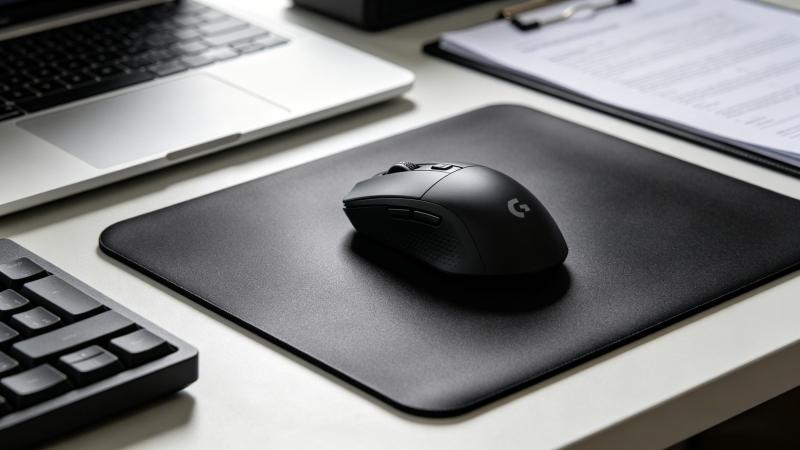
The most popular choice for the general gaming market. It provides a 1:1 ratio of glide speed to stopping power.
Acrylic & Zowie-style Fabrics: Engineered for players who need to move fast but stop instantly.
Artisan Zero-style Surfaces: High-end weaves that provide a consistent “weighted” feel, making them a favorite for professional gaming gear collections.
Hybrid Pads: Some mouse pad factories now produce hybrid pads that combine synthetic fibers woven onto a rubber base, designed to be fast like a hard pad but comfortable like a soft one.
Designed for precision tasks, such as graphic design or tactical gaming, where every pixel counts.
Jacquard & Woven Grid: Textured surfaces that provide physical feedback to the mouse sensor.
Type 99 Fabric: A specialized high-friction weave designed for maximum stopping power and ultra-precise positioning.
Before placing a bulk order for thousands of units, verify these four technical points with your supplier:
Heat Stability: The fabric must handle 200°C (392°F) for at least 45 seconds without warping. If the fabric shrinks too much, the mouse pad will curl.
The “White-Point” Standard: The whiter the “blank” fabric, the more accurate your colors will be. FDMAT ensures high Optical Brightness for perfect CMYK reproduction.
Grammage (GSM): A consistent weight of 180g–220g/㎡ ensures the fabric bonds permanently with the rubber base.
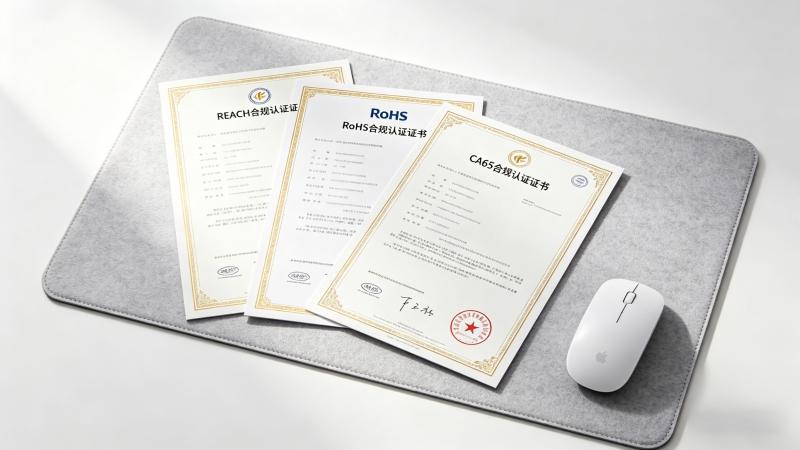
International Compliance: Always ensure the materials are REACH, RoHS, and CA65 certified for legal export to Europe and North America.
Additionally, mouse pad manufacturing services often include lamination and finishing options to enhance durability and appearance.
In mass production, “cheap” can become very expensive. Watch out for these common issues:
Ghosting: Caused by high fabric shrinkage during the heat press.
Delamination (Peeling): Occurs if the fabric has improper chemical coatings that prevent the rubber from sticking. Proper lamination is essential to prevent the design from peeling or yellowing over time.
Yellowing: Low-quality polyester can turn yellow when exposed to high heat.
Additionally, the rubber base of mouse pads provides excellent grip and stability, preventing them from sliding during use—an especially important feature for gaming and high-precision tasks.
As a leading mouse pad manufacturer, FDMAT understands the technical constraints of a printing factory. We don’t just sell blanks; we provide the technical data you need to scale your production.
Custom Solutions: Whether you need Speed, Balance, or Control surfaces, we provide consistent quality across every batch. We can print custom mouse pads using high-quality dye sublimation printing for vibrant, detailed designs, with no minimum order quantities.
Factory-Direct Pricing: Optimized for B2B procurement and large-scale sourcing.
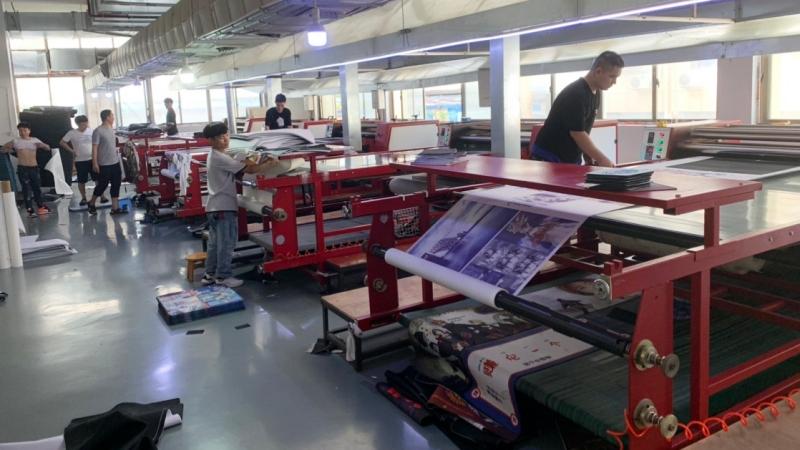
Choosing the right sublimation fabric is about balancing print clarity with production stability. The most successful B2B partnerships are built on technical trust.
Ready to upgrade your production quality? Visit us at www.fdmat.com to browse our full collection of custom mouse pads and mats. Explore the options, add your own artwork for a personalized product, and see how your designs come to life.
Contact us today to request a “Fabric Comparison Sample Kit” or a Technical Data Sheet (TDS). Let our experts help you choose the perfect surface for your next big order!


